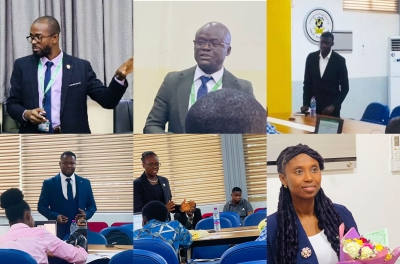
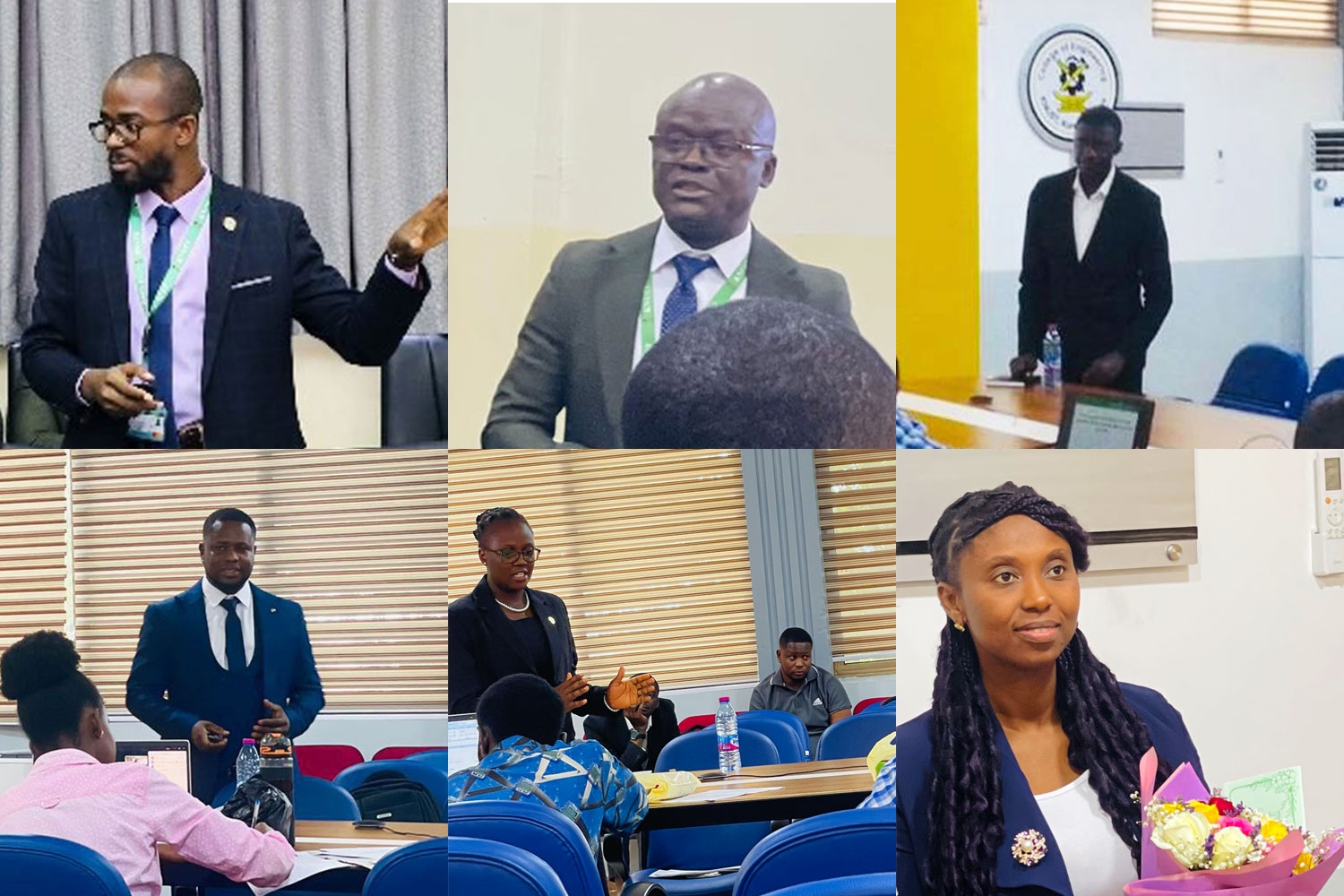
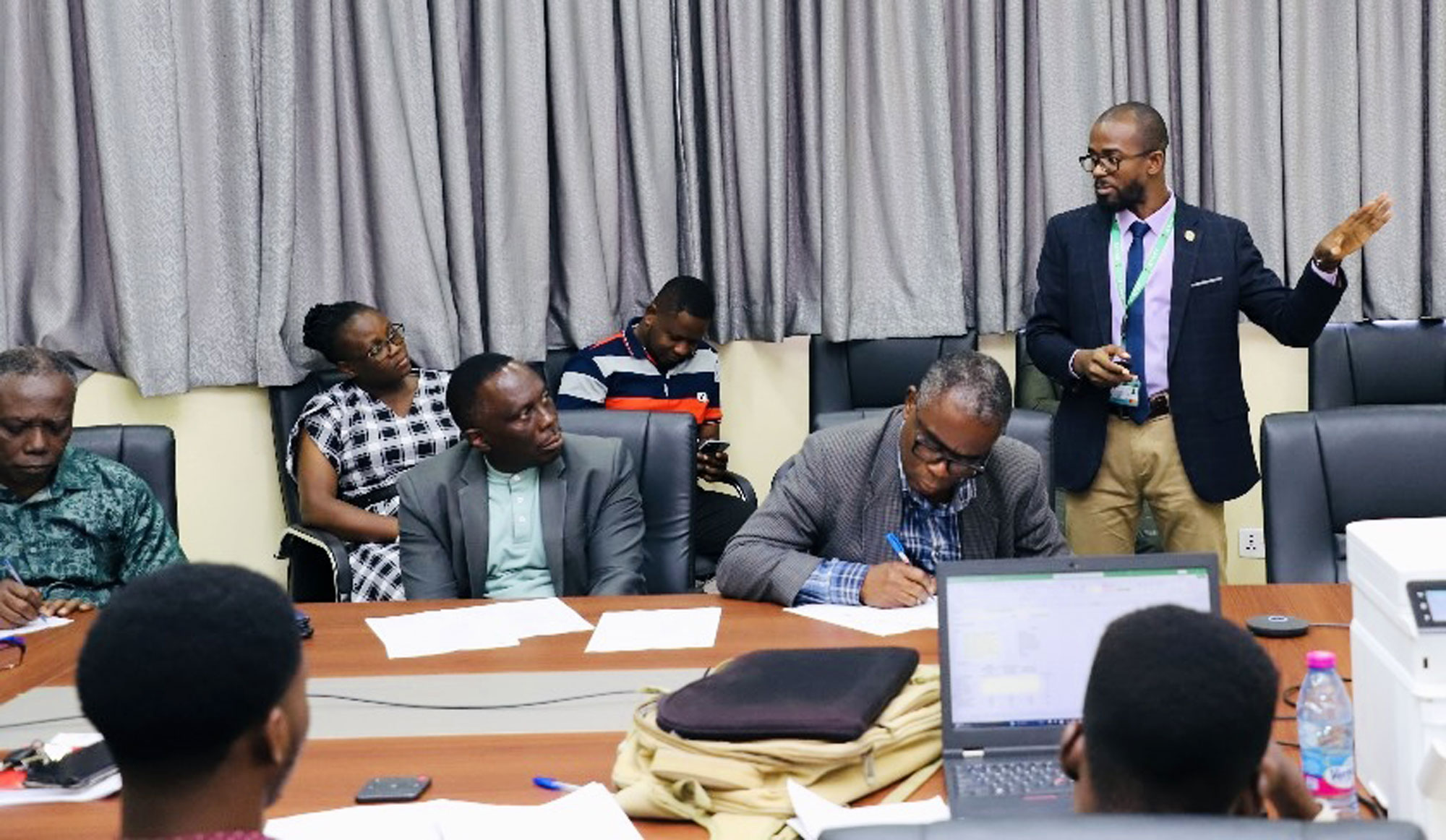
Six Ph.D. research scholars of the Regional Transport Research and Education Centre Kumasi (TRECK) at the Kwame Nkrumah University of Science and Technology (KNUST), Simeon Stevenson Turay, Phodie Musa Kamara, Ahmed Kudu Mohammed, Appiah Suma Michael, Gbadewole Opeyemi Antoinette, and Delali H. Adjei, have successfully defended their doctoral thesis. Their research aligns with TRECK’s thematic focus areas and reflects the Centre’s continued commitment to promoting excellence, innovation, and sustainability in transport and infrastructure research.
Simeon Stevenson Turay’s research addressed the challenges of planning, coordinating, and integrating informal public transport (paratransit) with high-quality bus transport systems in Freetown, Sierra Leone. Employing statistical and machine learning models, he explored a feeder-trunk arrangement and developed an AI-based predictive model for commuter preferences for a dedicated bus lane public transport system. Simeon also designed two web-based applications for fare estimation and real-time passenger information using crowdsourced data to support integration efforts. His work has been published in reputable journals including Transportation Engineering, African Transport Studies, Transportation Planning and Technology, and Urban Planning and Transport Research. Simeon is a registered professional engineer and a lecturer at the University of Sierra Leone. He has received numerous awards and grants, including the CV Raman Fellowship for African Researchers and the Volvo Research and Educational Foundations (VREF) Study Visit Grant.
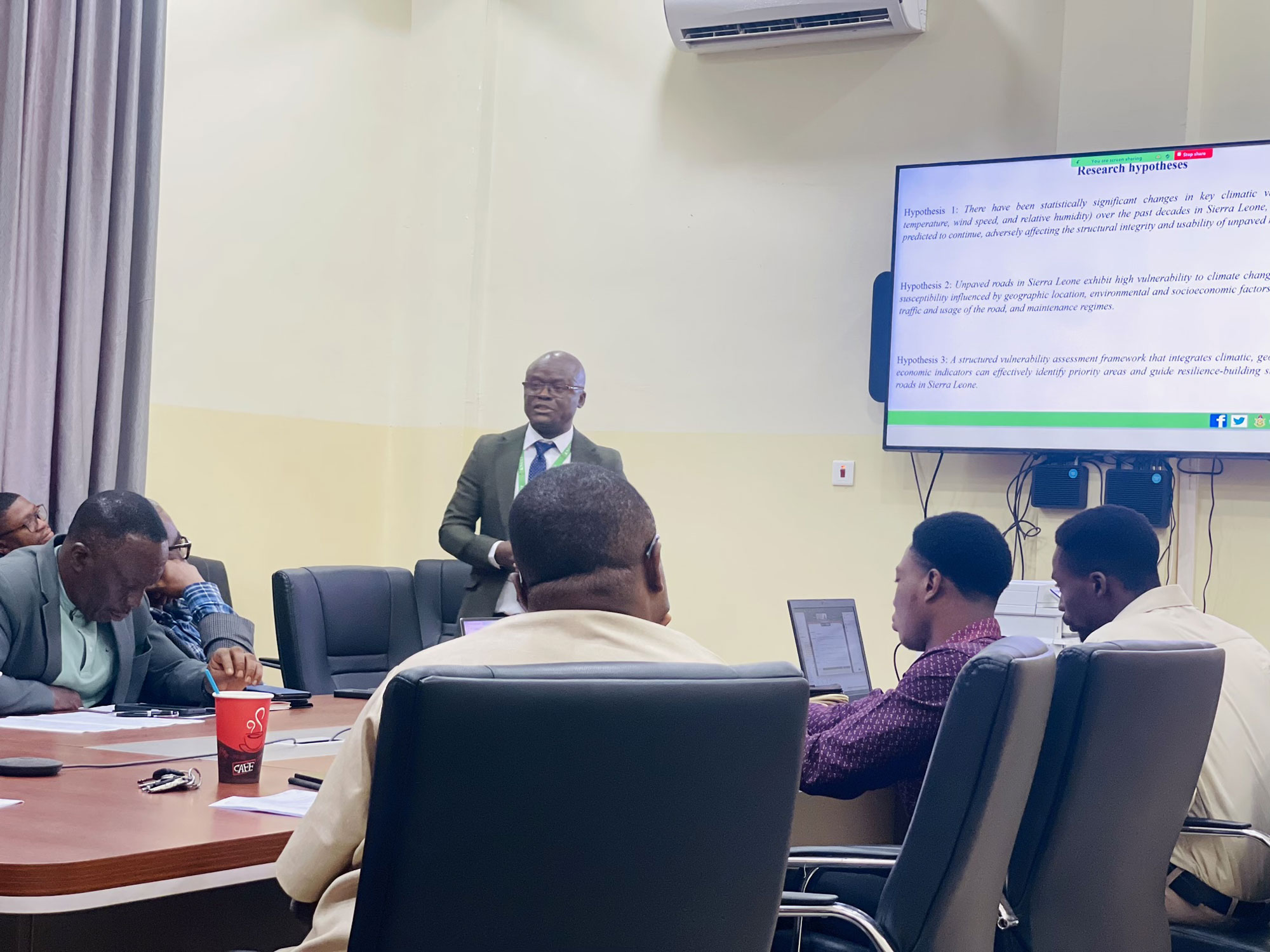
Phodie Musa Kamara’s research focused on developing a comprehensive and cost-effective framework to assess the vulnerability of unpaved roads in Sierra Leone to the impacts of climate change and variability. The study responds to the need for resilient infrastructure in resource-constrained settings and introduces a participatory approach to data collection and analysis, enhancing local ownership and applicability. The framework was validated against Intergovernmental Panel on Climate Change (IPCC) standards and aligned with Sierra Leone’s National Adaptation Plan (NAP), Nationally Determined Contributions (NDCs), and the United Nations Sustainable Development Goals (UN SDGs). His publications have appeared in Sustainable Futures and Frontiers in Climate. Phodie serves as the Deputy Director of Trunk Roads at the Sierra Leone Roads Authority (SLRA), where he applies his research insights to national infrastructure planning and development.
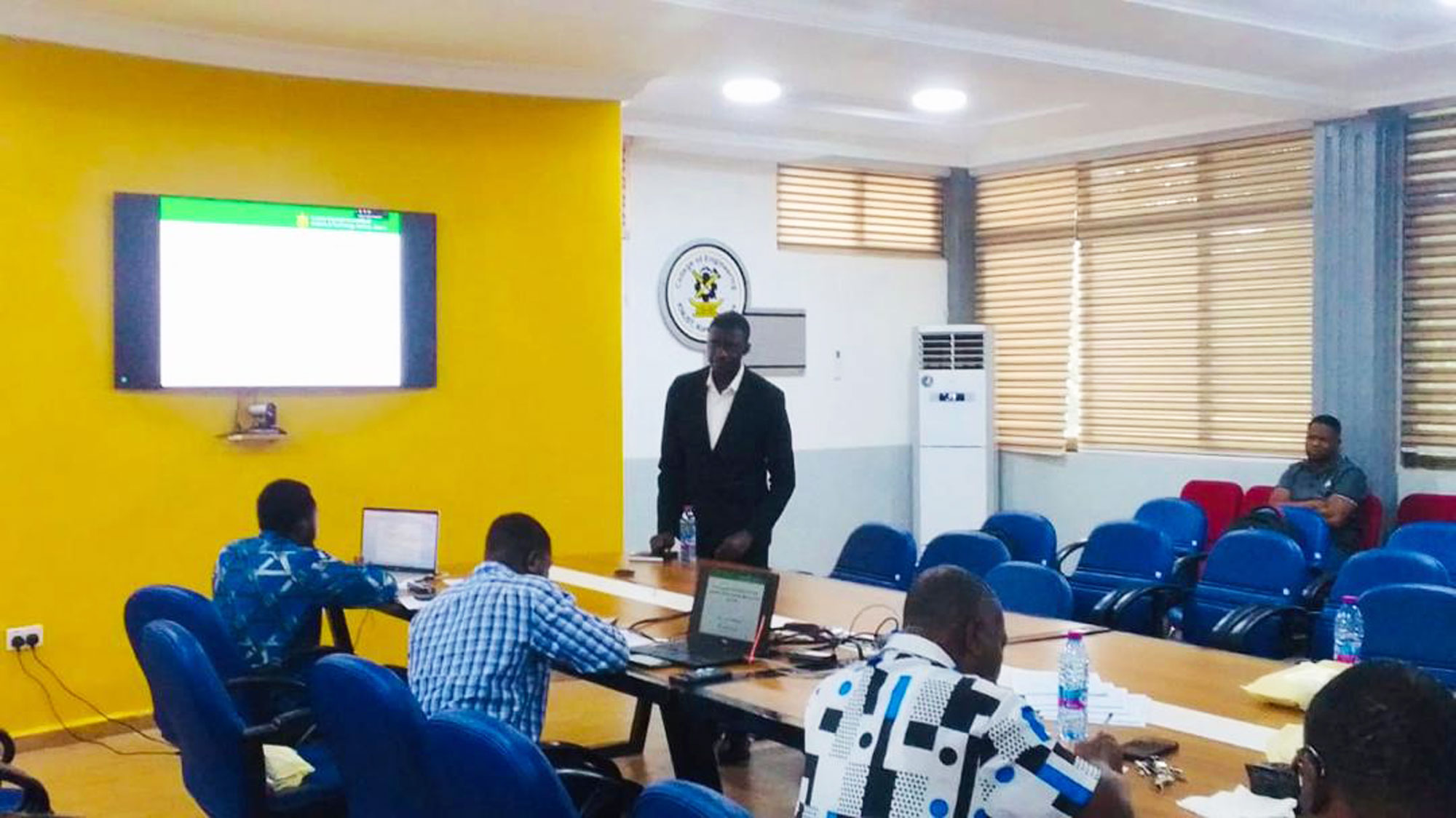
Ahmed Kudu Mohammed’s research addressed practical infrastructure challenges through a study titled “Determination of Optimum Tack Coat Application Rate for Asphalt Mixture Types Used in Ghana.” His findings identified optimal tack coat application rates suitable for different asphalt mixture types, ensuring better interlayer bonding and reduced pavement distresses such as slippage, debonding, bleeding, and premature cracking. Ahmed’s research offers valuable contributions to improving pavement performance and maintenance practices. He is a researcher at the Nigerian Building and Road Research Institute (NBRRI), where he contributes to road construction innovations across Africa.
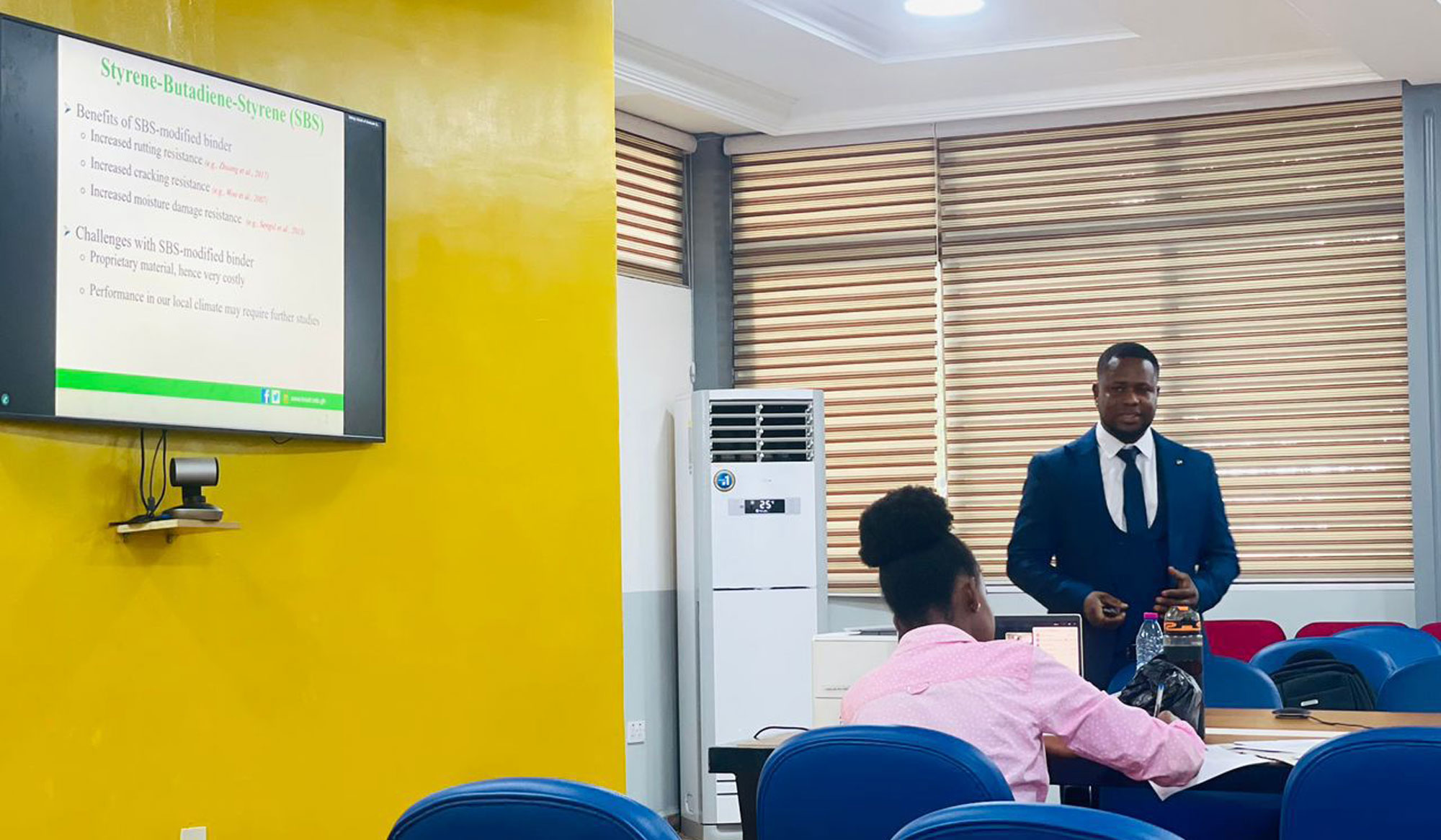
Appiah Suma Michael’s research contributed to sustainable pavement technology by investigating the use of Ground Tyre Rubber (GTR)-modified bitumen for Ghana’s road sector. His work addressed the absence of guidelines in Ghana’s Standard Specification for Road and Bridge Works (MRH, 2007) regarding GTR use. Through laboratory experiments, he established optimal GTR dosage, particle size, and modification temperature, and evaluated performance under various ageing conditions. His findings demonstrated GTR’s ability to enhance pavement performance and longevity while providing a cost-effective solution to waste tyre management. Appiah, a civil engineer, entrepreneur, and project manager, combines technical expertise with a commitment to environmental sustainability and innovation.
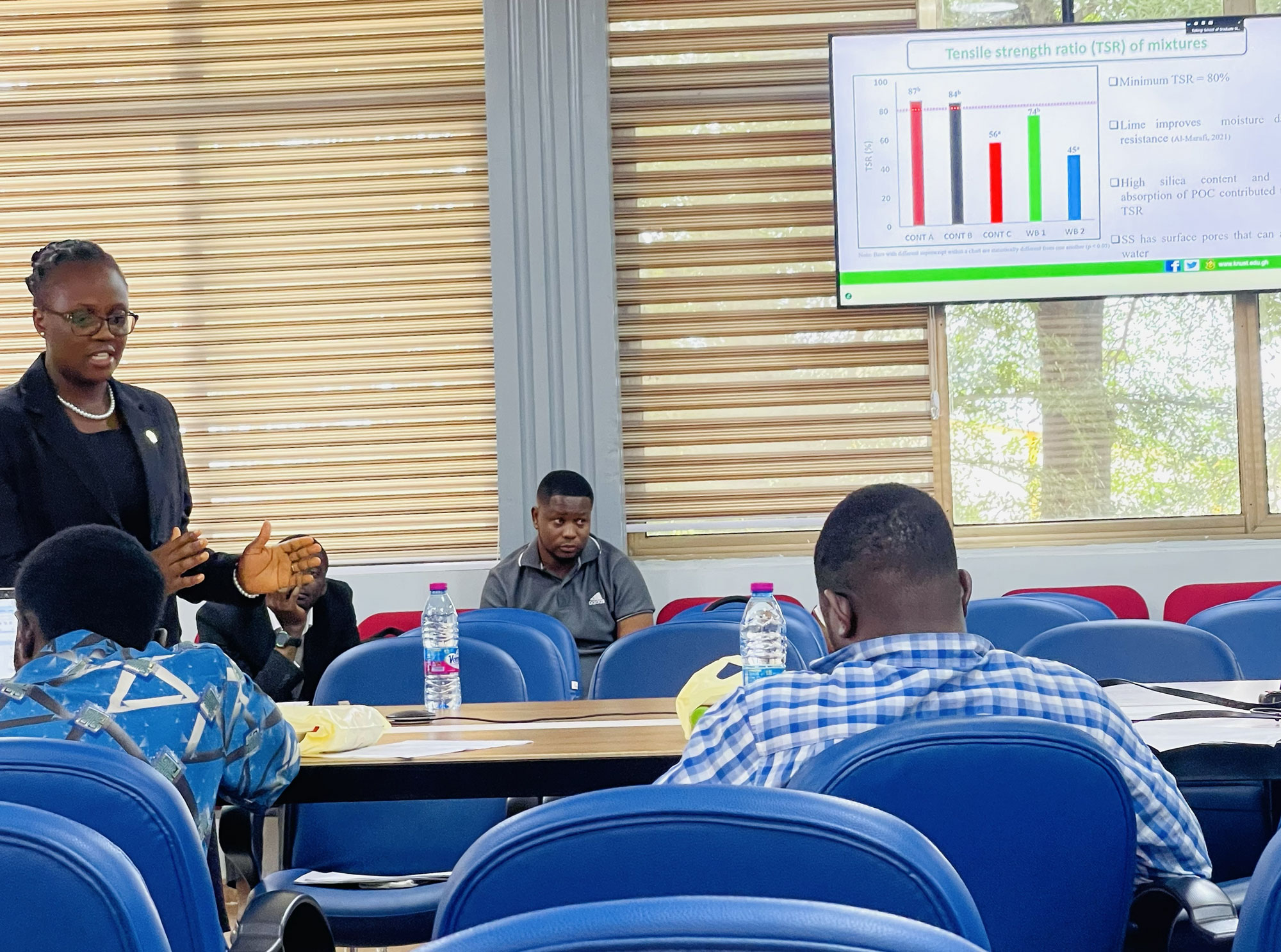
Gbadewole Opeyemi Antoinette’s research focused on the evaluation of waste materials high-density polyethylene (HDPE), steel slag, and palm oil clinker as components of asphalt concrete. By integrating these materials into a single mixture, she explored their combined effects on cracking resistance, rutting resistance, and moisture susceptibility. Her findings established these waste materials as viable alternatives to conventional asphalt constituents, promoting environmental conservation and sustainability in pavement engineering. Opeyemi is a lecturer in the Department of Civil Engineering at the Federal University of Agriculture, Abeokuta (FUNAAB), Nigeria.
Delali H. Adjei’s research examined “The Effect of Nanoclay on the Performance Characteristics of Asphalt Binders and Mixtures.” Her study demonstrated that nanoclay enhances the rheological and moisture damage resistance properties of asphalt under Ghana’s climatic conditions, with optimal benefits observed at dosages below 1.0%. Her work contributes significantly to advancing the performance and sustainability of road construction materials. Beyond her academic research, Delali is a strong advocate for women in science, technology, engineering, and mathematics (STEM). She is a Research Scientist at the CSIR-Building and Road Research Institute (CSIR-BRRI), Ghana.

The achievements of these scholars highlight TRECK’s critical role in producing high-level human capacity and generating impactful research that advances sustainable transport systems across Africa. Their work exemplifies the integration of academic excellence, practical application, and policy relevance — reinforcing TRECK’s vision of supporting innovation-driven solutions to regional and global transport challenges.